Study habits · 7 min read
Measure Language Progress with Tasks You Can Repeat
Build a small progress record using recordings, comprehension checks, and repeated tasks instead of relying only on streaks or scores.
Published Updated
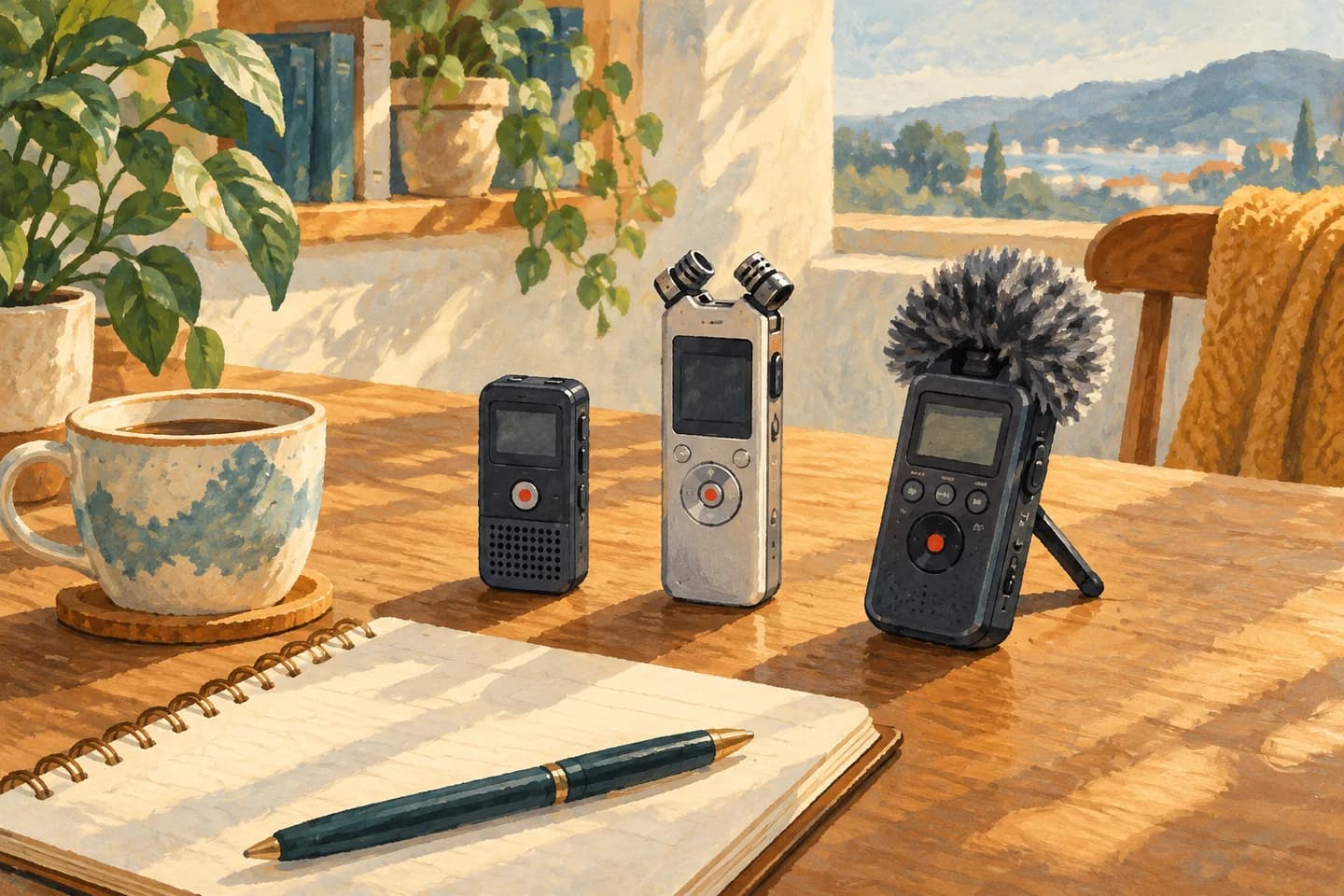
A streak tells you how often you opened a practice session. It does not tell you whether you understood the reply, found the words you needed, or managed a conversation with less help. Those questions need a different kind of record.
Choose a few tasks you can attempt again under similar conditions. Keep a short note or recording from each attempt, including the support you used. Over time, compare what you could do. The comparison will be imperfect, but it can show you a useful next step more clearly than a single overall number.
Choose a task for each skill you care about
For listening, use a short recording and identify specific information: where someone is going and when they leave. For speaking, explain a familiar plan or make a short request. For vocabulary, produce a few phrases from situation cues. You do not need to test every skill if only one matters to your current goal.
Make the tasks relevant. A learner preparing for travel could check a hotel exchange, directions, and a food order. Someone preparing for workplace conversations might explain a schedule change. Do not use a broad label such as 'good at speaking' when you can name the actual situation.
Keep an easy task and a slightly harder one. If every check is beyond your current level, the record may only show repeated frustration. If every task is memorized, it may hide the difficulty of handling new details.
Record the conditions beside the result
For a listening attempt, note whether you used a transcript, slower playback, or several replays. 'Found the departure time after three listens with text' differs from 'Found it on the first listen without text.' Both describe something you accomplished, and the details make the next comparison meaningful.
For speaking, record whether you read a script, used a few cues, or spoke without notes. Write whether a listener understood your request and where they needed clarification. A pause count alone can be misleading: a slower answer may carry the message more accurately than a fast but confusing one.
Use plain descriptions rather than a complicated scoring system at first. A small log might have columns for task, support, outcome, and next practice. If maintaining the log takes longer than the practice, simplify it.
Compare the same task and a fresh version
Repeating the same prompt helps you compare wording and confidence under similar conditions. Keep the first recording and revisit it after several sessions. Look for a specific change, such as asking the question without reading or finishing the exchange with one clarification.
Then try a fresh version. Change the room number, destination, or reason for the request. This separates familiarity with a rehearsed task from the ability to adjust it. A strong repeated attempt and a difficult new one can both be accurate results; they show where the skill currently depends on preparation.
Avoid comparing two attempts made under very different conditions as though they were a controlled test. Background noise, fatigue, microphone quality, and unfamiliar speakers can affect the outcome. Note those differences instead of treating every worse result as lost progress.
Read a filled log without turning it into a proficiency score
Use this invented English task: ask when a museum closes, then confirm the reply. The rehearsal question is 'What time does the museum close?' and the practice reply is 'It closes at six.' These are sample language and fictional opening hours. Have a partner read the reply without displaying it to make the check auditory; reading the reply silently is a different task. Below is a fictional log showing how to record evidence, not a claim that these changes will occur on this schedule.
Baseline: Task: ask and confirm closing time. Support: full question visible; reply played three times. Outcome: asked while reading, identified six, and said 'At six?' after looking at a cue. Next practice: cover the question and rehearse the confirmation.
Same-task repeat: Task: the same six-o'clock exchange. Support: no script; reply played once. Outcome: asked independently and confirmed six. Next practice: try a reply whose time is not already known.
Changed-task attempt: Task: same question, reply 'It closes at five.' Support: no script; reply played twice. Outcome: question came readily, but the learner first wrote six and only identified five on replay. Next practice: have a partner shuffle replies containing four, five, and six, and write the number before confirming it.
The repeat supports a narrow conclusion: this rehearsed question needed less visible help. The changed attempt reveals a listening gap that the easy repeat hid. Give the next session to varied times; do not label the learner fluent or assign a certified level. Keep the original recordings and conditions so a later comparison can check the same evidence.
Rewrite a progress claim until the evidence can support it
Compare these two notes: 'My listening improved' and 'On this hotel clip I identified both times without the transcript; last time I used the transcript.' The second note is narrower, but a future session can check it. The first does not reveal the recording, conditions or meaning of improved. Use the narrower note before making a broader interpretation across different speakers and tasks.
Try a second claim: 'I know the phrase because I recognized the correct option.' Recognition among supplied answers does not demonstrate that you can produce the phrase without them. Repair the claim to 'I chose the appropriate phrase from three options.' Then add a separate production task if unaided use matters to your goal. Neither result needs to be discounted; they answer different questions.
Keep a compact evidence card: task and date; material identifier; support used; exact outcome; fresh variation; next action. You can record 'not attempted' for the variation rather than inventing a generalization from one success. A useful progress record contains enough information to disagree with your first interpretation. It should not be a collection of numbers chosen only because they rise.
Use the record to choose the next practice
Suppose your hotel question is easy, but you miss every reply that contains a number. Spend the next session on listening to varied times. If you hear the times but cannot ask a follow-up, prepare and rehearse that question. The record is useful because it changes what you practice.
Review the log occasionally rather than judging your ability after every attempt. Day-to-day results can vary. Look for a pattern across several comparable tries, and keep examples of what improved as well as what remains difficult.
An app's quiz or pronunciation score can sit beside these observations, but it should not replace them. Formal proficiency assessment has its own procedures and criteria; this home record does not establish a certified level. It gives you evidence about the specific tasks you chose.
Apply what you read · no account needed
Check your understanding
Write a progress claim that is no broader than the task, support and transfer evidence actually observed.
Use it in a different situation
Rewrite one broad progress claim using its exact task and conditions. Add one fresh version that could challenge the claim, then keep both outcomes.
This is a self-check, not a language-level assessment. Your answers stay on this page and are not sent to our server.